





How to Soothe a Heat Rash with Red Light Therapy
- 01 What causes a heat rash?
- 02 What are the symptoms of heat rash/prickly heat?
- 03 How to prevent heat rash?
- 04 How to soothe a heat rash?
- 05 Benefits of red light therapy on a heat rash
- 06 Hyperpigmentation and red light therapy
- 07 How to use red light therapy on a heat rash
- 08 The Takeaway
- 09 Frequently Asked Questions
If you’ve ever dealt with a heat rash, you already know how itchy, uncomfortable, and red it can get on your skin. Heat rash can be caused by a multitude of things, but adding red light therapy in the summer can be a pretty helpful tool in your recovery process. Red light therapy works well to calm inflammation, reduce redness, and support your skin's natural healing process.

Read on to find out what causes heat rash, how to prevent it from coming back, and how to use Project E Beauty's red light therapy devices to soothe your skin when it needs it the most.
What causes a heat rash?
A heat rash, also known as prickly heat or miliaria, occurs when your sweat ducts become blocked and can’t bring sweat to the skin’s surface. You probably won’t be surprised to hear that heat rash can happen when you’re in super-hot or humid weather. It can also occur when wearing tight clothing that traps heat and moisture, when you’re doing a tough workout, have a fever, or even when you get sunburnt (don’t forget that SPF!).
What are the symptoms of heat rash/prickly heat?
When heat rash develops on your skin, you can expect to see small clusters of red, raised bumps or clear blisters that feel itchy, prickly, (occasionally) stinging, and uncomfortable. Sometimes heat rash can appear as deeper red or white lumps that feel prickly but aren’t usually itchy.
A heat rash can occur anywhere on your body, but you’ll typically find the rash in places where sweat tends to collect. These areas include under your breasts or armpits, on your neck and upper chest, in your groin, under skin folds, and around your waist.
How to prevent heat rash?
The good news is that a heat rash can generally be avoided with the right steps and preventative measures. When it starts to get hot, opt for wearing loose, lightweight, breathable fabrics—cotton or moisture-wicking materials allow sweat to evaporate rather than sitting against your skin. It’s also a good idea to scope out the air-conditioned rooms around you, use a fan, and avoid long periods in direct sunlight during peak hours.
After you’ve been sweating from a workout, a long day out in the sun, or a humid commute, make sure to shower and change out of any damp clothing as soon as you can. Keeping your skin clean and dry is one of the best ways to stop sweat ducts from getting blocked in the first place. You should also consider skipping heavy creams or oil-based products on hot days, since thick formulas can trap heat and interfere with your skin's ability to sweat normally.
How to soothe a heat rash?
If you find that you can’t quite avoid a heat rash, there are ways you can treat it to lessen the redness, itchiness, and general discomfort.
- Keep Cool & Dry - Make sure you get out of any heated areas and move to a cooler spot (bonus points if you can find some air conditioning).
- Cool off - Consider taking a cool shower to calm your skin down, and change into loose, cotton clothing to avoid tight-fitting clothes that can further trap heat and sweat.
- Lightweight lotion - If your skin is itchy or dry, you can apply a gentle, lightweight moisturizer to the area to help calm your skin down.
-
Red light therapy - Red light therapy works by delivering low-level wavelengths of light into the skin, which can help calm inflammation, reduce redness, and stimulate cellular repair.
Benefits of red light therapy on a heat rash
Red light therapy and prickly heat are a natural pairing—it works by penetrating below the skin’s surface to stimulate the mitochondria in your cells. This gives them an energy boost that accelerates repair and regeneration. For skin that’s been through the stress of a heat rash flare-up, LED light therapy can help minimize redness and create a stronger skin barrier over time.

When you have a healthy and strong skin barrier, your skin is better equipped to regulate temperature and moisture. This can help prevent a heat rash from developing again. Additionally, red light therapy is a good fit for heat-rash-prone skin because it’s non-invasive, gentle, and doesn’t generate heat. And unlike some other treatments, there isn’t a risk of further aggravating already-sensitive skin.
Hyperpigmentation and red light therapy
Sometimes, once the bumps and irritation clear up, a heat rash can leave dark spots or uneven patches that linger on the skin, a result of post-inflammatory hyperpigmentation (PIH). This can happen when inflammation triggers an overproduction of melanin, the pigment that gives skin its color, leaving behind discoloration even after the rash has fully healed.
Don’t expect it to erase discoloration overnight. But with consistent use, red light therapy can be a gentle and effective way to fade the marks a heat rash can leave behind.
How to use red light therapy on a heat rash
Using red light therapy for a heat rash flare-up is easy when you incorporate products from Project E Beauty into your routine. And the good news is that there’s an option for wherever the rash shows up.
Step 1: Cleanse and dry your skin
Before any red light therapy session, make sure your skin is cleansed and patted dry with a clean towel. Bare skin absorbs light most effectively, so skip any creams or serums until after your session.
Step 2: Choose the right device for your rash
- For the face — LumaLux Face Mask is your best bet. Slip it on and press the power button for two seconds to activate it. The default mode (red + infrared + deep infrared) is exactly what you want when your skin is inflamed and in recovery mode. Because the LumaLux has a flexible, lightweight design, it won't add friction or pressure to already-sensitive skin, and with 800 high-grade LEDs delivering full, even coverage, no irritated area will get left behind.
- Face and neck area — The LumaLux Neck & Dec Mask is designed specifically for the delicate skin of the neck and décolletage. It uses the same clinically proven red, infrared, and deep infrared wavelengths to soothe inflammation and support recovery in an area that's especially prone to heat and sweat buildup.
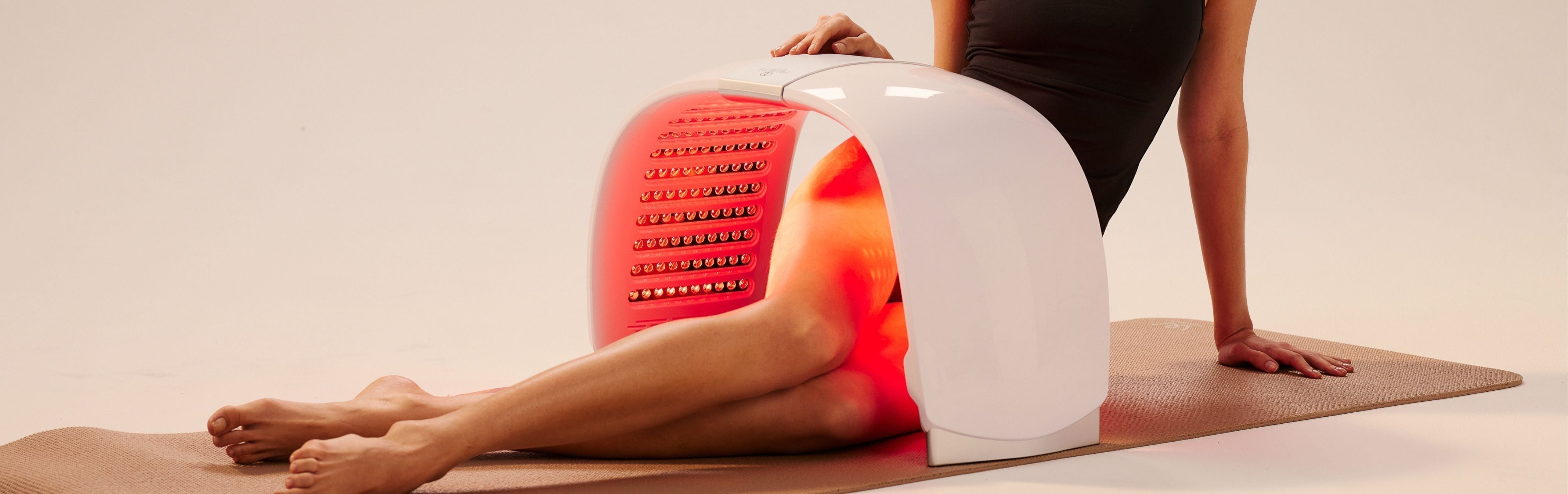
- Larger areas — If your heat rash is more widespread the Alora Age Renewal LED Panel is worth considering. Its three adjustable panels deliver five wavelengths across a larger surface area, making it easy to treat multiple spots in a single session without the panel ever touching your skin.
Step 3: Let the device do its work
Sit back and let your device run its course. The LumaLux masks automatically power down after three minutes, while the Alora panel wraps up in eight.
Step 4: Follow up with a moisturizer
After your session, apply a gentle, lightweight moisturizer to keep your skin barrier supported and help your skin recover.
The Takeaway
Although heat rash can get uncomfortable, it’s important to remember that it’s only temporary. Thankfully, with the right approach, you can help your skin recover faster using the right tools and techniques. Staying cool, keeping skin clean and dry, and wearing breathable fabrics are your best defenses against a flare-up. And when one does happen, red light therapy—whether through the LumaLux Face Mask, the LumaLux Neck & Dec Mask, or the Alora Age Renewal LED Panel—can be a gentle, non-invasive way to calm inflammation and reduce redness. A few consistent sessions a week can make a real difference in how quickly your skin bounces back.
Frequently Asked Questions
Can red light therapy speed up heat rash recovery?
Red light wavelengths stimulate mitochondrial activity, which accelerates the skin’s natural recovery cycle. While it is not an instant cure, daily sessions help relieve redness and swelling significantly faster than letting the skin dry out and recover entirely on its own in warm, humid conditions.
Does red light therapy help relieve heat rash itching?
One of the primary benefits of red light therapy is its ability to calm skin irritation and reduce itching. By targeting the localized inflammation around the sweat glands, it provides soothing relief to the prickly, stinging sensations of heat rash, making the entire healing process much more comfortable.
How often should you use red light therapy to soothe a heat rash?
Daily red light therapy helps soothe persistent irritation and speed up healing. Just ensure your skin is completely clean, cool, and dry beforehand, as lingering sweat or heavy lotions can block the beneficial light.

Alora | Age Renewal LED Light Therapy Panel
Target up to 5 skin layers with advanced blue, infrared and red light therapy contour panel

LumaLux Face | Pro LED Red Light Therapy Mask
Our most advanced LED mask for deeper skin renewal - fine lines, acne, hyperpigmentation, skin texture


Leave a comment
This site is protected by hCaptcha and the hCaptcha Privacy Policy and Terms of Service apply.